Treestand Replacement Straps: When Should You Replace Them?
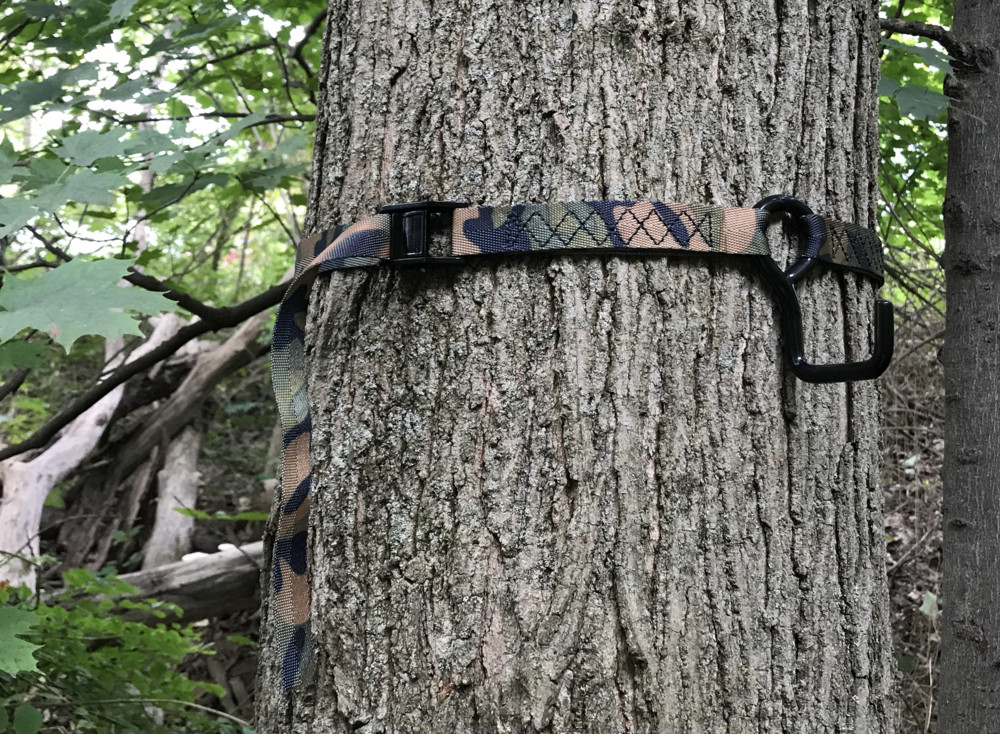
If you ask any seasoned hunter what defines a successful hunt, you’ll likely hear the same answer time and again. A safe hunt is a successful hunt. While scouting, gear, and skill all play a role in a good day in the field, safety should always come first. Good safety in the woods starts with the equipment that holds you up.
Treestand replacement straps are among the simplest and most overlooked pieces of gear that can make or break your safety. Whether you are using hunting straps to secure your ladder, hold your stand in place, or help you haul gear up to your perch, these straps can take on wear and tear from the harsh outdoors or repeated tension. So how do you know when it’s time to swap them out? Let’s break down the signs to watch for.
Why Tie Down Strap Condition Matters So Much
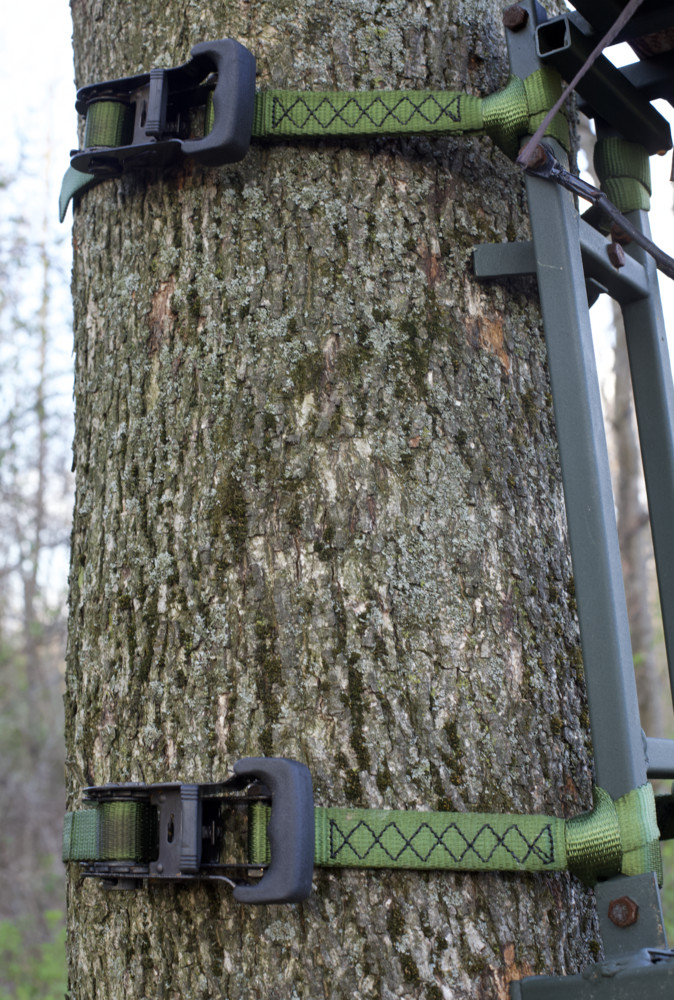
One of the most important reasons strap condition matters is that it is one of the few things standing between you and a serious fall. Every season, hunting straps are exposed to harsh outdoor elements including rain, snow, sun, strong winds, and freezing temperatures.
Over time, this can weaken or damage the strap, even if the strap still looks fine from a few feet away. Damage such as cuts or frays can cause the tie-down strap to no longer meet the rated working load limit. This is why it’s incredibly important to inspect your tie-down straps regularly. That’s also why we strongly urge customers to add additional tie-down straps if they ever feel unsafe with their securement setup, creating a safety net to improve safety.
Signs It’s Time to Replace Your Treestand Straps
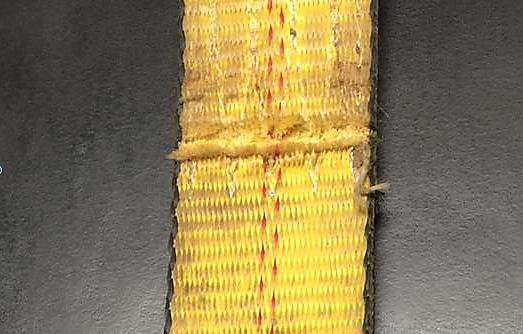
Visible Fraying or Cuts – If you notice any nicks, cuts, or frayed edges on the webbing on your treestand strap, you should immediately stop using it, as it is unsafe to use. Even small cuts can weaken the strap’s overall strength far more than it appears on the surface.
UV Damage and discoloration – One of the leading ways that tree stand straps become damaged over time is due to exposure to direct sunlight. Over time, direct sunlight can cause tie-down straps to fade from their original color or become stiff. If you notice any signs of sun damage, the webbing has likely lost strength even without tears.
Mold, Mildew, or Rot – Another one of the leading signs of damage for tie-down straps is mold and mildew caused by moisture. If you plan to leave your treestand straps up year-round through wet seasons, inspect them regularly for signs of mildew or rot.
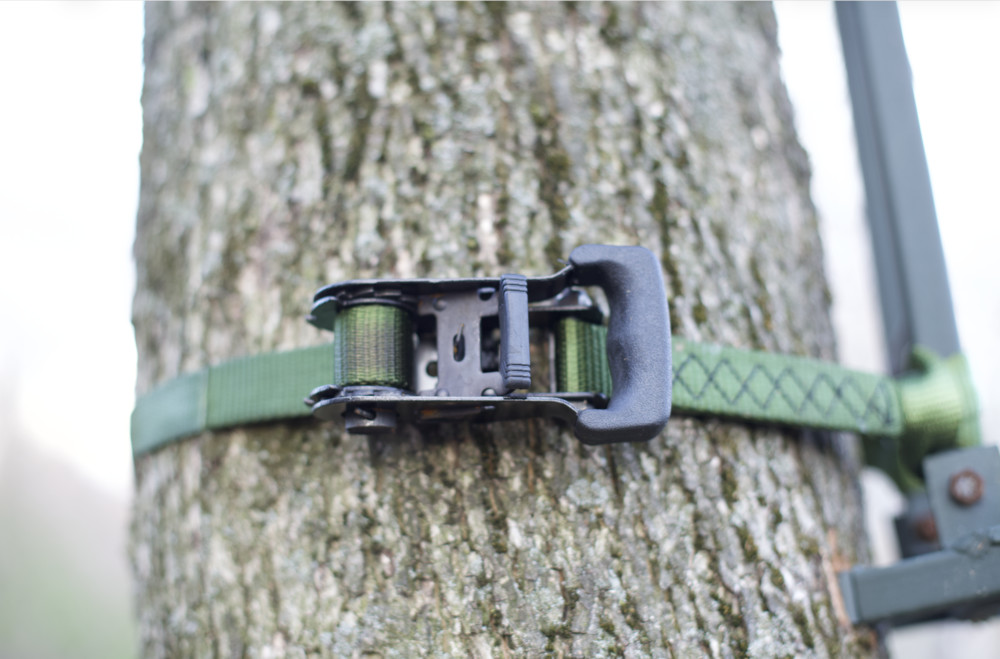
Hardware Damage – One of the rarer types of damage that treestand straps may receive is the hardware becoming damaged from corrosion, dents, or bending. The most common type of bending is from user error due to overtightening. Ratchet hardware allows the strap to be tightened much more than cam buckle hardware, which uses hand strength to tighten.
For further information on inspecting a ratchet strap or other tie-down straps for damage, make sure to check out our full blog post on How To Inspect Tie Down Straps For Damage.
What Should You Do If Your Treestand Strap Becomes Damaged?
If you find visible damage on tie-down straps during your inspection, stop using them immediately, as they are unsafe. Next, you can either buy a new tree stand strap or a replacement short end or long end to replace the damaged portion and restore the strap to like-new condition.
As a manufacturer of custom tie-down straps in-house in Bellville, Ohio, we can make them exactly how you previously ordered. That way, the replacement you receive is a direct fit for the tie-down you previously purchased. Orders for custom-made replacement tie-down straps typically ship the same day the order is placed.
If you have questions, need custom options, or need help placing an order over the phone, call us at 800-444-0956. We look forward to helping you find exactly what you need for your next outdoor hunting adventure.
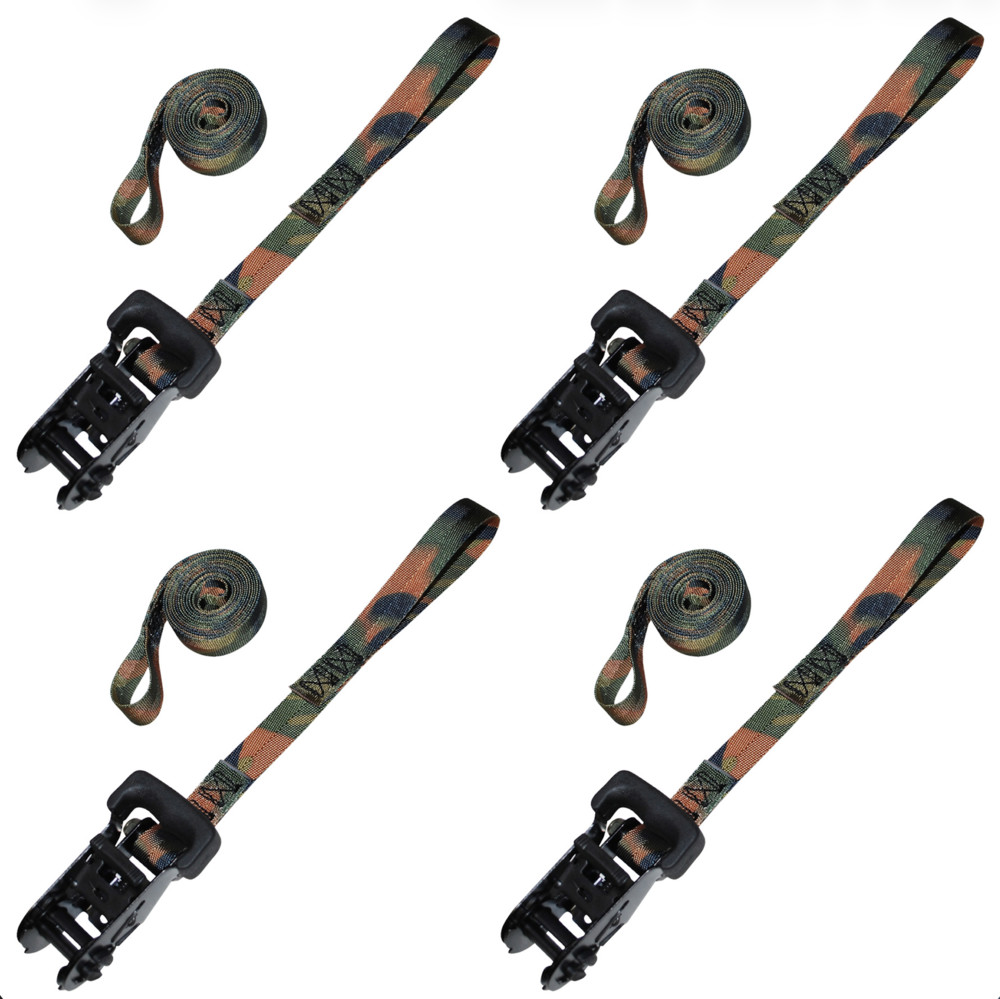
Shop Our Popular Replacement Treestand & Hunting Straps


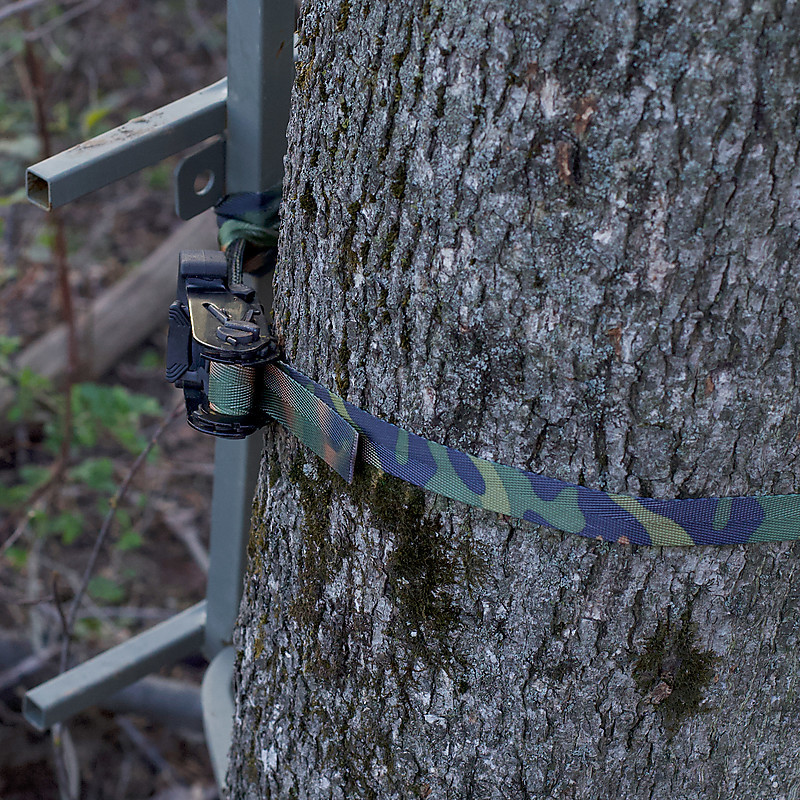
Frequently Asked Replacement Treestand Strap Questions
Are Ratchet Straps or Cam Buckle Straps the Better Choice for Treestands?
Both ratchet straps and cam buckles work well for tree stands. The main difference between the two strap types is the hardware used to tighten them. Ratchet Straps use a gear mechanism that moves in one direction to tighten by cranking the handle back and forth.
This creates controlled tension and allows you to tighten the strap much more than cam buckle straps. One of the biggest disadvantages of ratchet hardware is that if you are not careful when tightening the tie-down straps it can cause overtightening damage.
Cam buckle straps are tightened by hand by pulling the excess webbing through the buckle until you reach the desired tension. Once released, the buckle’s metal teeth grip the webbing and hold it securely in place. This also reduces the risk of damage from overtightening, which is why most manufacturers of treestands and hunting blinds tend to recommend cam buckle straps.
Can You Leave Treestand Straps Up Outdoors Year-Round?
You can leave tie down straps outdoors year-round. However, rain, snow, strong winds, direct sunlight, and changing temperatures can cause wear over time. This is why you should inspect your straps regularly for fraying, cuts, fading, damaged stitching, or other signs of wear and tear. When your treestand straps are not in use, store them indoors away from direct sunlight and moisture to help prevent damage and extend the product lifespan.
How Often Should You Inspect Your Treestand Straps?
We often hear from customers about how often to inspect your hunting gear. We suggest a thorough inspection of all gear before the hunting season begins, in the middle, and again toward the end of the season when you take your stand down in the off-season. This prevents you from missing opening day and finding that your setup is dangerous and unsafe in its current condition. At the end of the season, re-checking all of your gear allows you to make repairs or replace your gear before placing