The Differences Between Ratchet Binders and Lever Binders
Published on 02/16/26
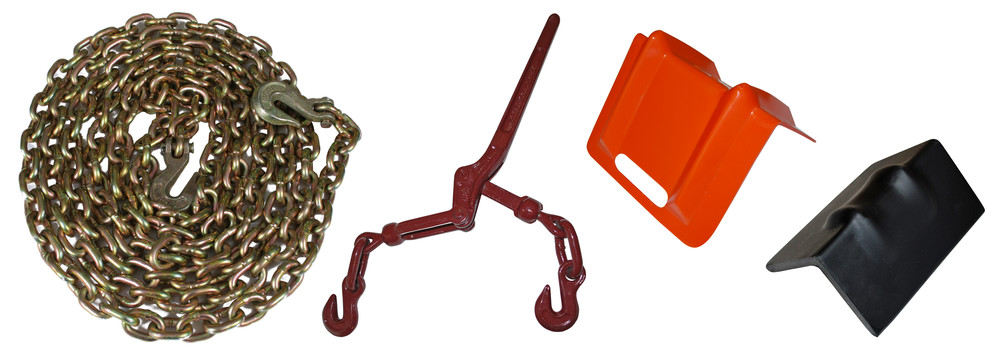
What Are Transport Chain Load Binders?
Transport chain load binders are used to secure heavy cargo on flatbed trailers. Some common cargo types secured with transport chains and chain binders include heavy equipment, machinery, steel materials, construction supplies, vehicles, and more.
The transport chain functions by wrapping around or attaching to the load, then using the chosen ratchet binder to tighten the chain and remove excess slack, securing the cargo in place. The two most common types of chain binders are ratchet chain binders and lever release chain binders. Both chain binders can be used to remove excess chain slack. However, there are several key differences in how they are tightened and released.
In this blog post, we will go over the differences between the two chain binder options and help you decide which one works best for your application. Let’s begin.
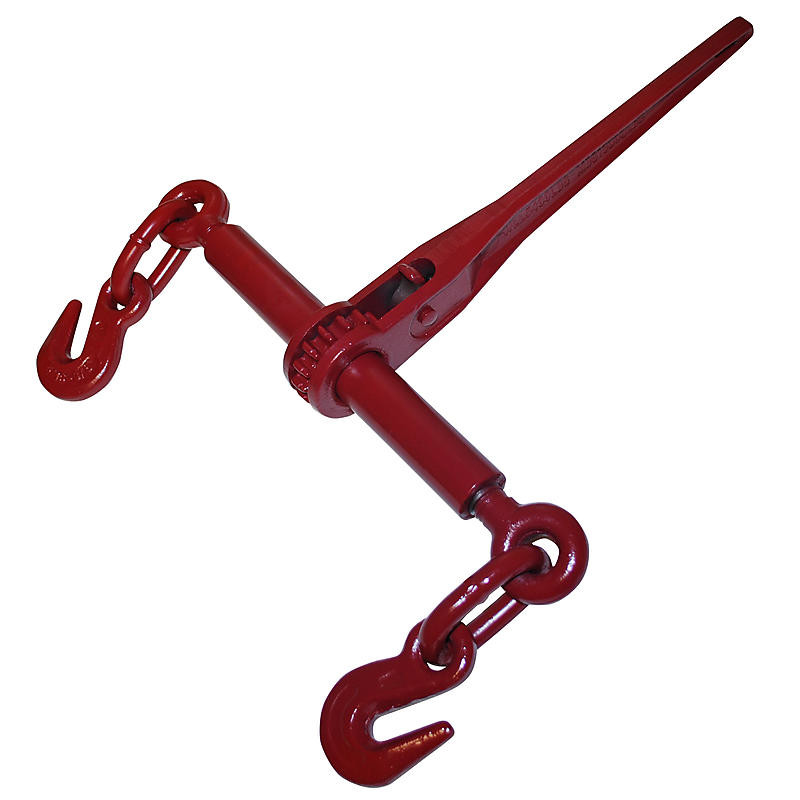
What Are Ratchet Load Binders?
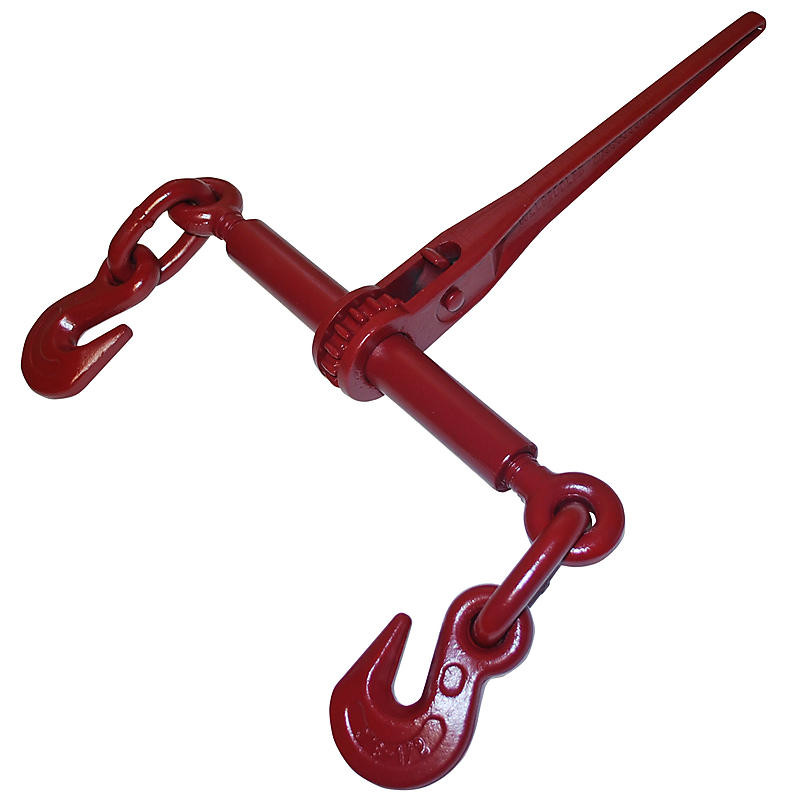
Ratchet load binders are the most popular style of chain binders used by professionals. One of the primary reasons they have become the go-to option is that they offer better safety and control when tightening down cargo using transport chains. Ratchet binders are tightened by swinging the handle back and forth, similar to a socket wrench, and have two tension hooks at each end of the handle to tighten the chain into place with the desired tension. This gives you very precise tightening, which is ideal when you are securing either heavy or delicate cargo.
Another reason ratchet load binders are the go-to choice for professionals is the additional safety they offer compared to lever release binders. When tightening, chain ratchet binders are slightly slower but have much more controllable pressure, which is ideal for heavy or delicate cargo being transported on open-air trailers. It also takes much less physical strength to tighten ratchet load binders in place, making it a better option for an aging workforce.
The greatest safety concern arises during the unloading process when releasing the chain under great tension. Unlike lever-release ratchet binders, using ratchet load binders is much more controlled and less dangerous to use when unloading cargo from the trailer. Lever-release ratchet binders are known to have a dangerous reputation for the handle to whip back or recoil toward the operator when releasing the chain stored under tension.
We offer ratchet load binders in multiple sizes and strength ratings to match different chain grades and transport requirements. Whetheryou are transporting farm equipment or heavy machinery, we have a setup that can safely secure your application. All of our transport chain links are stamped every 7th chain link to comply with the Department of Transportation (DOT) general rules and guidelines for cargo control.
If you need any help, our experts are standing by and can provide further information or pricing for equipping your flatbed setup. Our experts can be reached by calling us at 800-444-0956 or by using our contact us page at the top of the website if you prefer email. We look forward to finding out how we can help make your next haul safer.
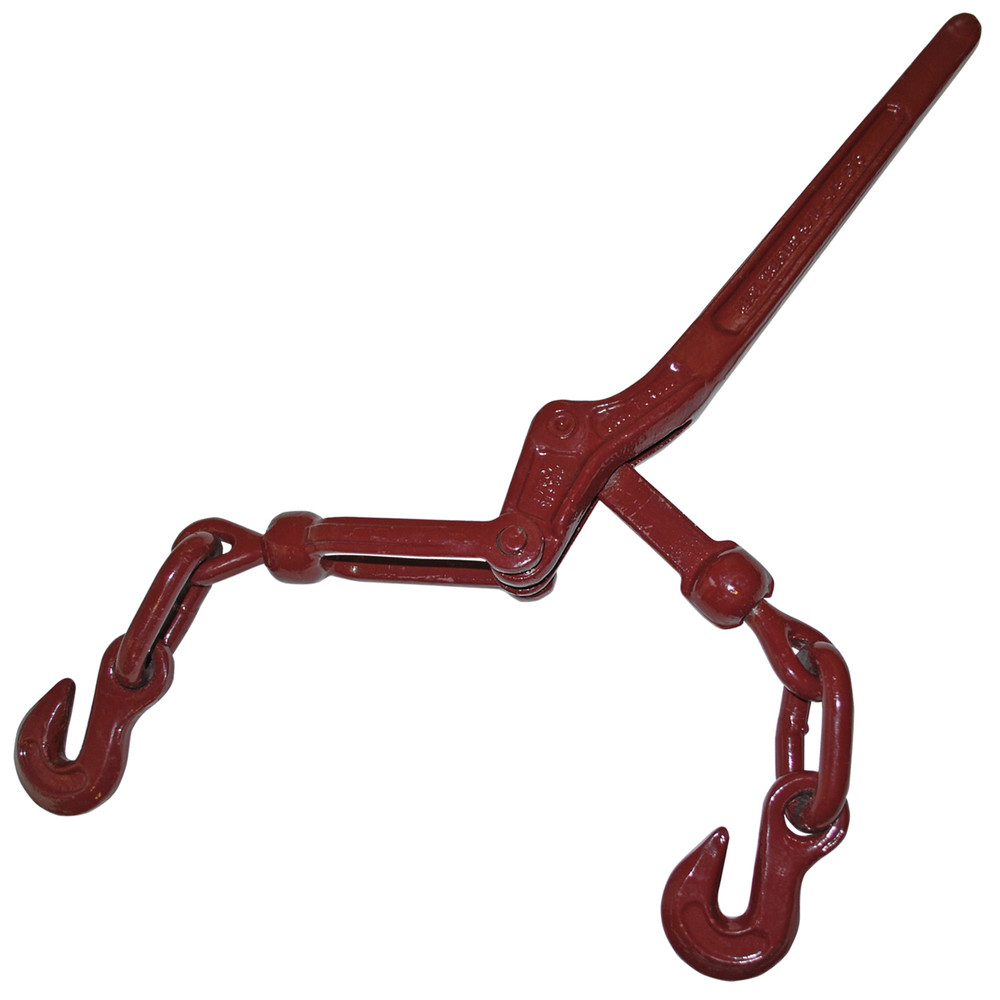
What Are Lever Release Load Binders?
One of the main advantages of using lever-release load binders is that they are much faster for securing cargo when loading and unloading. This makes lever-release binders the go-to choice for short hauls due to the time savings they offer. Once you reach the desired tension, the over-center lock holds tension until you are ready to unload. Due to fewer moving components required to manufacture the product, it also comes at a much lower price making it the ideal choice for some drivers.
There is one major tradeoff with lever-release load binders; incorrect use can cause injury to the operator. One major safety concern occurs when a cheater bar is used to tighten a load binder, as the added leverage can exceed the safe working load of the chain or binder. This occurs because lever load binders store kinetic energy in the handle, which can release outward when tension is released. Another safety risk when using lever-release binders is the possibility of recoil during unloading, as a chain binder under high tension can snap back toward the driver.
Although injuries are rare, the safety risks associated with improper use have made lever-release binders less popular than ratchet load binders, which offer better tension control and do not require a cheater bar to tighten. However, when used correctly, lever load binders can make a great addition to any flatbed fleet.
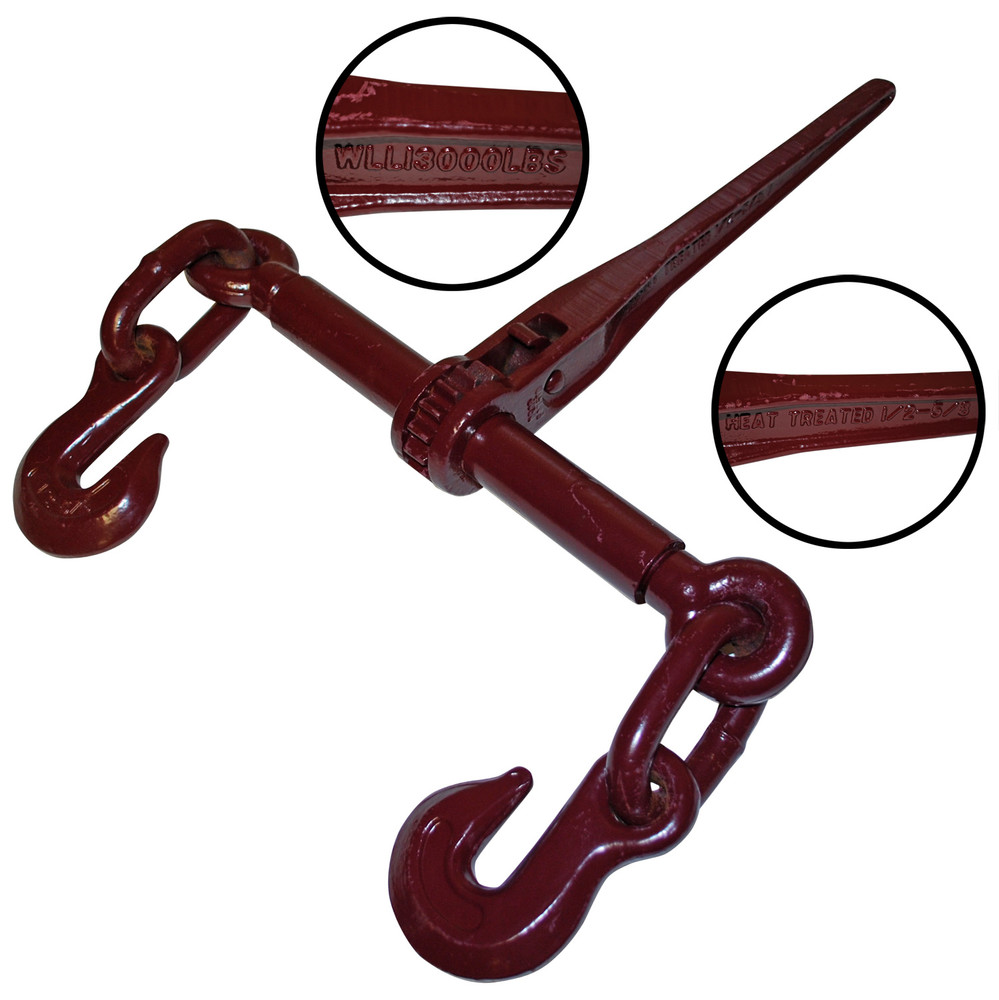
Are Ratchet Load Binders or Lever Release Binders Better?
We often hear feedback from customers wondering which chain binder is the right option for their cargo. Our general recommendation to customers is to normally opt for ratchet binders unless you have previously used lever binders and prefer them. While lever-release load binders are faster to operate and more affordable, they carry higher safety risks.
Lever binders are generally easier to secure cargo with as they have fewer moving components and can secure much quicker than ratchet binders. The speed differences that lever-release binders offer are great for saving time for drivers who make multiple stops per day.
Because of the overall safety improvements that ratchet load binders offer, it’s become the go-to choice for many professionals over the last decade. Ratchet load binders are better at tightening the chain more tightly than lever release binders. This helps ensure that your load isn’t at risk while moving down the road, becoming unsecured or untensioned. The ratchet binders use a ratchet mechanism that holds tension much better than lever-release binders when driving over bumps, potholes, or even sharp corners.
If you need any help or recommendations on what works best for your rig or fleet, call our experts at 800-444-0956, and we would be happy to provide you with further information or pricing.
Shop Our Popular Load Binders and Transport Chain


Frequently Asked Load Binder Questions
How Many Chains Do I Need To Secure My Load
Securing cargo on open-air flatbed trailers can be very simple when you have the right tools. That’s why it’s important to know the load’s weight so you can choose the right number and strength of transport chains. When checking whether your chains are sufficient for the load, use the working load limit rating, which is derived by dividing the chain’s breaking strength by 3 for a safety factor of 3 to 1.
For example, a chain with a 10,000 lbs breaking strength would be rated at 3,333 lbs. After you have determined the weight of the cargo and the number and strength of chains you will need to secure your load, then you can balance the load evenly from all corners to prevent load shifts or unwanted stress on certain areas of your securement.
If your cargo weight exceeds the combined working load limit of your chains, add more chains or use a higher-grade transport chain that is more closely rated to the weight of your load. If you believe your load is unsafe for travel, add more tie-down straps, transport chains, or both before driving.
What Are The Different Grades of Transport Chain?
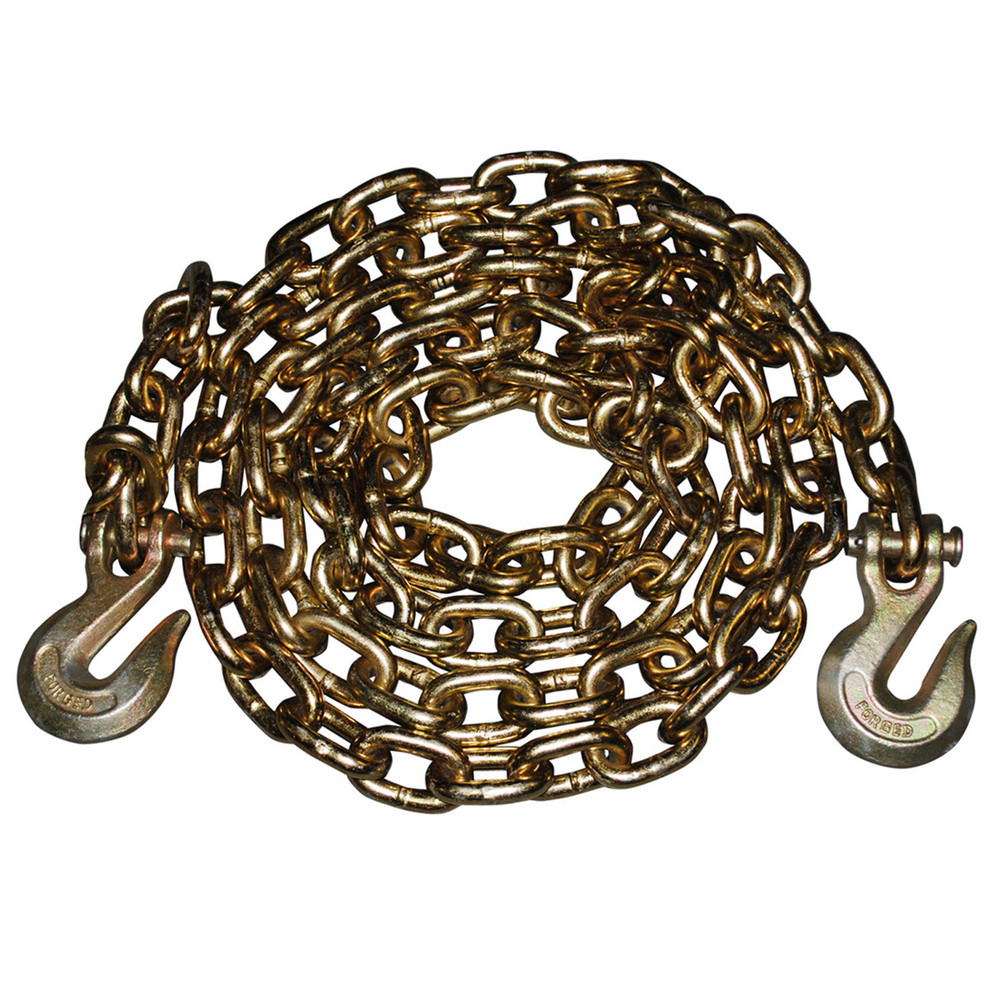
At Trucking Depot, we stock transport chains in common lengths and sizes. Available sizes include 1/4 inch, 5/16 inch, 3/8 inch, and 1/2 inch. Customers can buy chains in 16-foot or 20-foot lengths. Each chain length includes clevis grab hooks on both ends. For bulk chain needs, we have chain available by the drum.
Chain drums work well for fleet use to create chains in a variety of lengths. Each drum includes:
• 800 feet of 1/4 inch chain
• 550 feet of 5/16 inch chain
• 400 feet of 3/8 inch chain
• 200 feet of 1/2 inch chain
Trucking Depot stocks two grades of transport chain: Grade 30 (G30) and Grade 70 (G70). Grade 30 transport chain is a lighter-duty chain commonly used for around-the-house securement applications such as securing lawn mowers and farm equipment. Grade 70 transport chain, on the other hand, is a high-strength chain designed for heavy cargo securement applications primarily on flatbed trailers.
What Are Folding Handle Ratchet Binders?
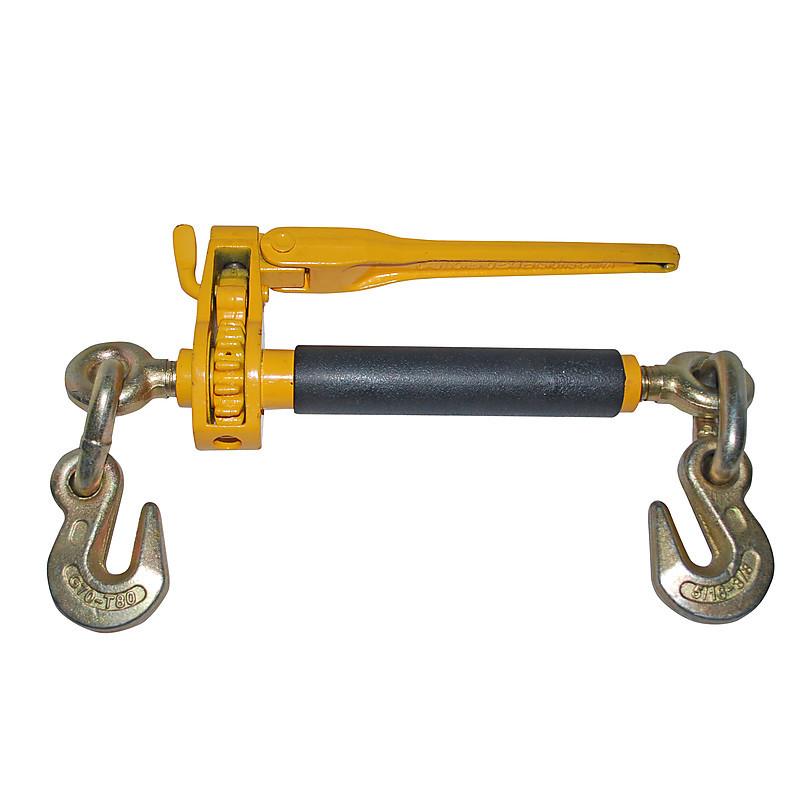
Folding handle ratchet binders are used to tighten several sizes and grades of transport chain and use a ratchet mechanism and handle that folds into a compact position. This design sets them apart from standard ratchet binders, and the folding handle makes tightening the chain easier in tight spaces.
One of the major benefits of the folding handle design is that it reduces the space needed inside the cab of the truck or trailer. One of the major benefits of using ratchet handle chain binders is the reduced handle kickback that improves user safety during tightening and release.